
The fashion industry has long been held hostage by its own sampling process. A typical new style requires three to five rounds of physical prototyping before a buyer signs off — each round costing weeks of elapsed time, thousands of metres of wasted fabric, and thousands of dollars in air freight between design studios and factories. For a mid-sized brand managing 200 styles per season, the cumulative drag on speed, margin, and sustainability is enormous.
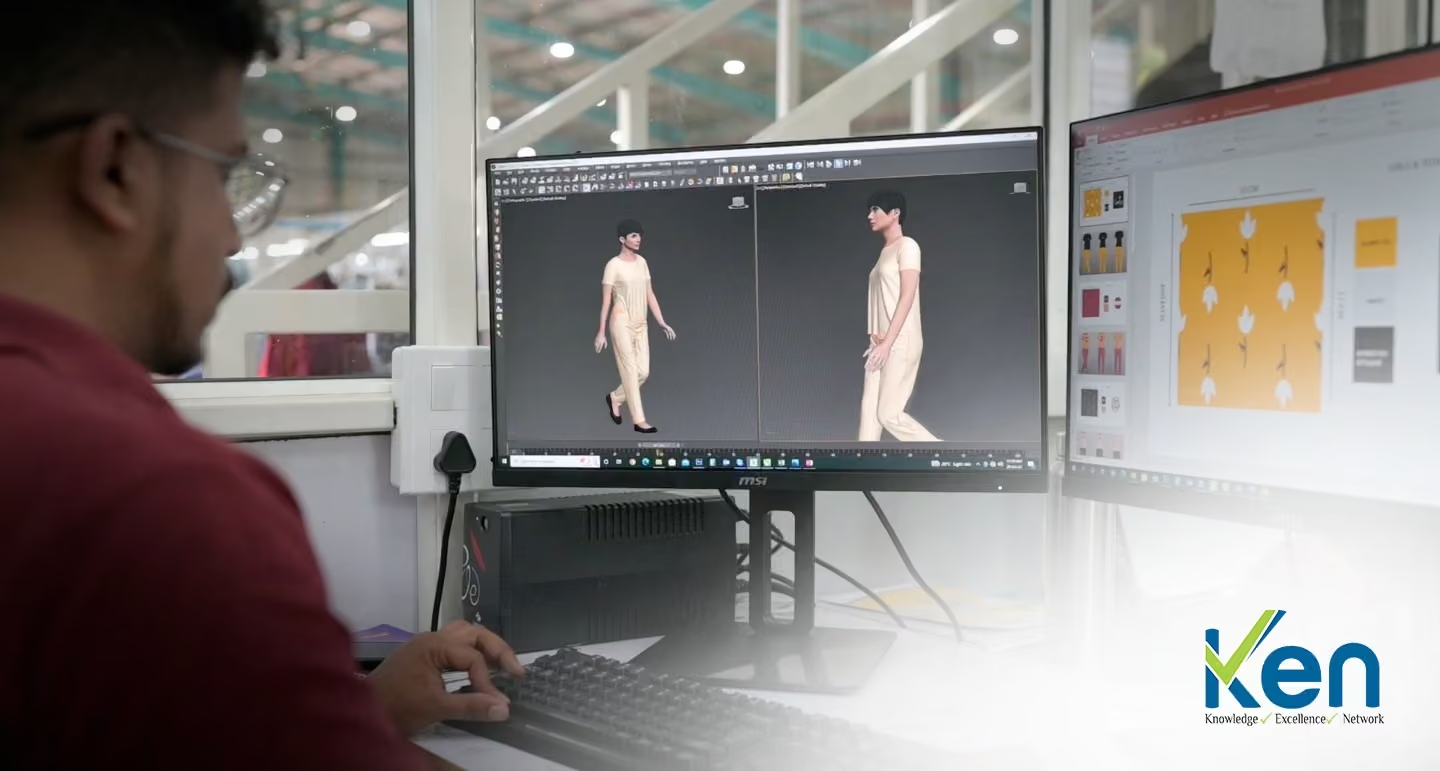
Virtual sampling — powered by platforms like Tuka3D and CLO3D — is fundamentally rewriting this equation. By replacing physical prototypes with photorealistic digital twins, brands can iterate in hours rather than weeks. A designer in London can approve a fit adjustment made by a technical team in Ichalkaranji within the same working day. No courier. No wait. No waste.
At KEN Global Designs, we integrated Tuka3D virtual sampling into our development workflow in 2022. The results across our client portfolio have been consistently striking. Development cycles that previously ran 8–10 weeks now close in under 3. The number of physical sample rounds per style has dropped from an average of 3.8 to fewer than 1.2. Fabric consumption in the development phase — historically a significant waste stream — has fallen by approximately 40% per style.
The economics are compelling at every point in the chain. For brands, faster development means earlier purchase-order commitment, which means earlier production scheduling, which means earlier delivery to market — and a meaningful head-start on capturing full-price sell-through before the markdown cycle begins. For manufacturers, fewer physical samples means less material sourcing, less skilled-labour time, and less logistical complexity.
"The first question brands ask us is: how realistic does it look?" says our technical sampling lead. "The second question, once they see it, is: why were we doing this any other way?" The technology has matured to a point where virtual samples are now accepted as final approval by a growing list of global buyers — including several major European fashion groups that KEN supplies.
The sustainability case is equally powerful. Every physical sample that is never made is fabric that was never cut, dyed, or discarded. For a brand with genuine ESG commitments, virtual sampling is not a nice-to-have — it is a credible, measurable reduction in development-phase waste that can be reported, audited, and communicated to consumers.
The transition is not without friction. Brands need to invest in 3D design capability either in-house or through their manufacturing partners. Fabric libraries must be digitised. Buyers need to be comfortable approving virtual samples. None of these are insurmountable barriers — but they require deliberate change management.
Our advice to brands still operating on fully physical sampling workflows: start with your highest-volume, lowest-complexity styles. Build confidence in the technology. Then expand. The brands that master this transition fastest will have a structural cost and speed advantage that compounds over time. The brands that wait will find themselves explaining to their boards why their development costs are still growing while their competitors' are falling.